
listGoAPI Essential
Data structure กับ Go
สารบัญ
รูปแบบ Data อื่นๆที่สามารถเก็บได้
นอกเหนือจากการเก็บข้อมูลประเภท String (ตัวอักษร), Number (ตัวเลข) และ Boolean (true, false) แล้ว ในภาษา go ยังมีรูปแบบข้อมูลแบบอื่นที่สามารถเก็บได้ โดยจะเน้นไปที่จุดประสงค์ของรูปแบบการเก็บข้อมูล (แทนที่จะเป็นประเภทข้อมูล) ซึ่งจะประกอบไปด้วย
- Array = รูปแบบการเก็บข้อมูลเป็น sequence เก็บหลายข้อมูลในตัวแปรเดียว กันไว้ เช่น
var a [5]int - Slice = คล้ายๆ Array แต่อนุญาตให้เปลี่ยนขนาดได้ (จากแต่เดิม Array ที่ต้องระบุขนาดเสมอ) เช่น
var s[]int - Map = ข้อมูล map ที่คล้ายๆ dictionary ที่สามารถเก็บ key คู่กับ value ตรงๆไว้ได้ (จากเดิมต้องระบุเป็นตำแหน่ง) เช่น
map[string]int - Struct = ตัวแปรที่ประกอบไปด้วยกลุ่มของ Variable ออกมาเป็นตัวแปรเดียว (ลักษณะคล้ายๆ Object ในภาษาอื่นๆ) โดยสามารถกำหนดชื่อ field และ type คู่กันไว้ได้ เช่น
type Person struct {
  Name string
  Age  int
}- Function = ในภาษา go function ถูกจัดอยู่ในประเภทหนึ่งของ data type โดยสามารถทำการประกาศเป็นเหมือนตัวแปรตัวแปรหนึ่งขึ้นมาได้ เช่น
var squareFunc func(int) int = squareเป็นการบอกว่า สร้างตัวแปร function รับเป็น integer และคืนค่าเป็น integer (เดี๋ยวเรามาลงลึกใน function อีกที) - Interface = data type ที่จะทำการระบุ set ของ method ที่จะต้องมีในกลุ่มที่จะใช้ data type ของตัวนี้ (เป็นเหมือนสร้างต้นแบบของ function เอาไว้)
type Shape interface {
  Area() float64
  Perimeter() float64
}- Pointer = data type ที่ทำการเก็บ memory address ของ variable เอาไว้ เช่น
var p *int - Channel = data type ใช้สำหรับการ communication ระหว่าง goroutines (ตัวสำหรับทำ concurrent thread ของการ execution ของ go) โดยประกาศเป็น
chan int(** ตัวนี้เราจะยังไม่พูดถึงในหัวข้อนี้ เนื่องจากมีรายละเอียดพอสมควร เราจะเก็บไว้เล่ากันช่วงกลางๆ Course อีกที)
Array and slice
Array และ Slice ใช้สำหรับเก็บข้อมูลที่เป็น sequence ของ Variable ใช้สำหรับการเก็บข้อมูลประเภทเดียวกันแต่เก็บทีละหลายตัวไปพร้อมๆกันได้
- โดยทั้ง Array และ Slice จะต้องประกาศ
[]เพิ่มเพื่อเป็นการบอกว่าตัวแปรนี้จะเป้นประเภท Array - โดย Array จะต้องระบุขนาดตอนประกาศว่าจะใช้ตัวแปรประเภทนี้เป็น Array ที่มีขนาด (จำนวนตัวแปรที่จะใช้งาน) จำนวนเท่าไหร่ เช่น ถ้าจะใช้งาน 3 ตัวก็ต้องประกาศเป็น
var myArray[3] intเป็นต้น - Slice จะกลับกัน slice ไม่จำเป็นต้องประกาศขนาดของ Array ไว้ก่อน สามารถใส่เพียง
[]และค่อยมาจัดการเพิ่ม data ได้
เรามาลองดูตัวอย่างการใช้ Array และ Slice กัน
Array
var myArray [3]int // An array of 3 integers
myArray[0] = 10    // Assign values
myArray[1] = 20
myArray[2] = 30
fmt.Println(myArray) // Output: [10 20 30]
ผลลัพธ์
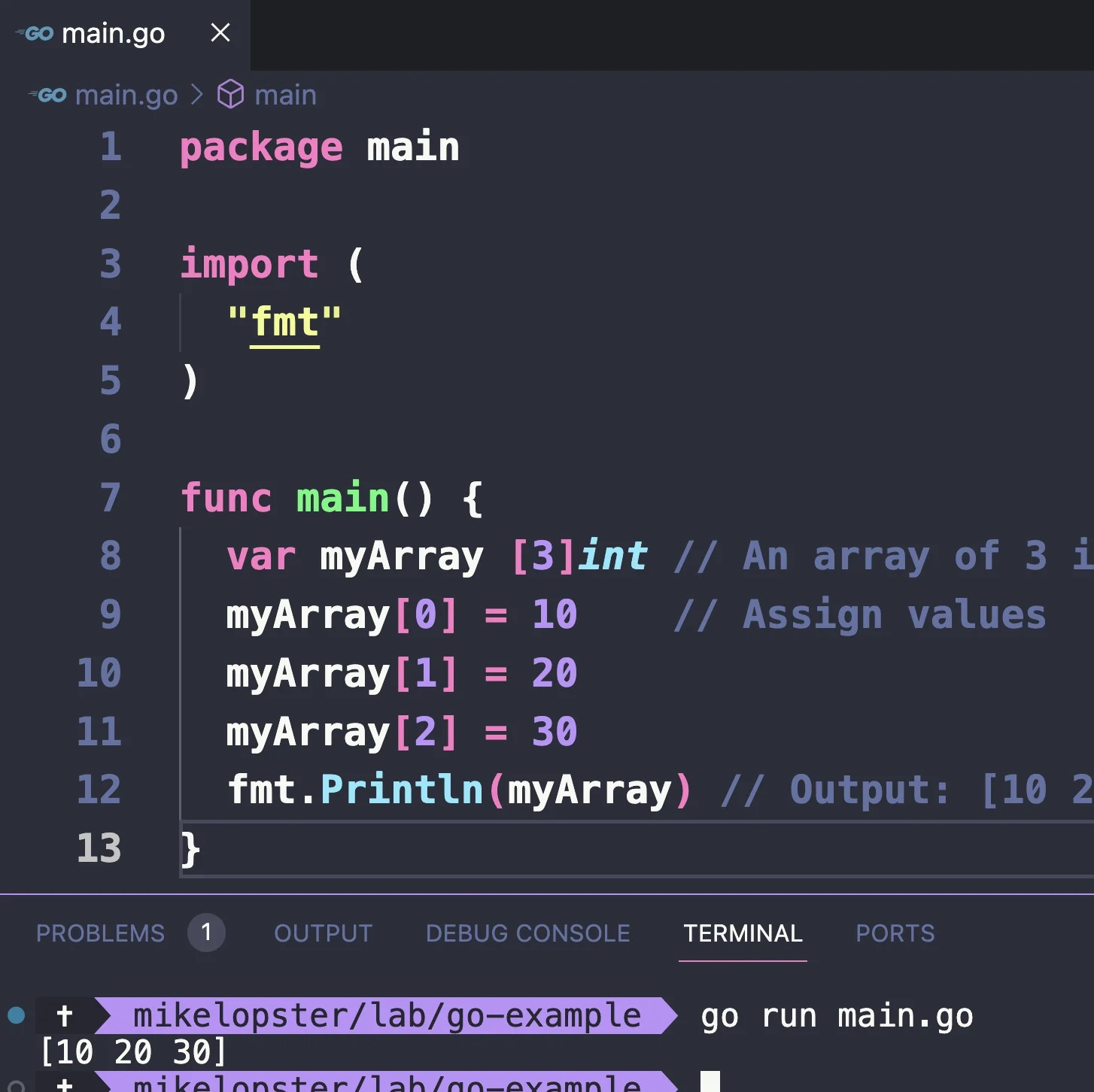
ดังนั้น ด้วยคุณสมบัติของ Array เราจึงสามารถใช้งานร่วมกับ loop ในการแสดงผลข้อมูล โดยการใช้ "ขนาดของ Array" (length) ในการเป็นตัวแทนของการวน loop ได้
var myArray [3]int // An array of 3 integers
myArray[0] = 10    // Assign values
myArray[1] = 20
myArray[2] = 30

// Looping through the array
for i := 0; i < len(myArray); i++ {
  fmt.Println(myArray[i])
}
ก็จะสามารถแสดงผล array รายตัวได้
จุดพิจารณาของการใช้ Array
- Array ไม่สามารถทำการ assign ซ้ำได้ หากจะ update ต้อง update เป็นราย index เช่น ถ้าเราทำแบบนี้
var myArray [3]int // An array of 3 integers
myArray[0] = 10    // Assign values
myArray[1] = 20
myArray[2] = 30
fmt.Println(myArray) // Output: [10 20 30]

myArray = [10, 20, 30]
fmt.Println(myArray) // Output: [10 20 30]
code จะเกิด error ออกมาทันที เนื่องจาก go มองว่า เรากำลังพยายาม assign ตัวแปรที่มีขนาดแตกต่างจากเดิมเข้าไปใหม่
แต่ยังคงสามารถที่จะเปลี่ยนแปลงข้อมูลราย index ได้
var myArray [3]int // An array of 3 integers
myArray[0] = 10    // Assign values
myArray[1] = 20
myArray[2] = 30

// Reassigning the elements of the array
myArray[0] = 100
myArray[1] = 200
myArray[2] = 300

fmt.Println(myArray) // Output: [100 200 300]- ไม่สามารถที่จะ resize Array ได้ หากประกาศใช้แล้ว ต้องใช้ขนาดนี้เท่านั้น
Array จึงเหมาะกับขนาดข้อมูลที่มีความแน่นอนเช่น
- เราประกาศมาจากการดึงข้อมูลที่มีขนาดแน่นอน
- ข้อดีที่แตกต่างกับ Slice คือ มันจะกิน memory ตามขนาดที่มันจองทันที (จะไม่เจอปัญหา memory leak ได้ ขณะแก้ไขข้อมูล)
Slice
slice จะมีความแตกต่างกับ Array คือ
- ไม่ต้องประกาศขนาด สามารถประกาศ
[]แล้วใช้งานได้เลย - จะกำหนดค่าเริ่มต้น หรือไม่กำหนดค่าเริ่มต้นก็ได้
- สามารถใช้คำสั่ง
appendในการเพิ่มข้อมูลเข้า array ได้ (ด้วยคุณสมบัติที่ยืดหยุ่นทำให้เราสามารถใช้คำสั่งappendทั้งเพิ่มและลบข้อมูลได้) - สามารถระบุ index ระหว่างกลางเพื่อดึงข้อมูลออกมาตามขนาดที่เพิ่มขึ้น เช่น
myslice[1:3]เก็บการหยิบ index ตั้งแต่ 1 ถึง 3 ออกมา (Array ก็สามารถทำได้ แต่ต้องทำในขนาดที่ประกาศเอาไว้)
package main

import (
  "fmt"
)

func main() {
  mySlice := []int{10, 20, 30, 40, 50} // A slice of integers

  fmt.Println(mySlice)          // Output: [10 20 30 40 50]
  fmt.Println(len(mySlice))     // Length of the slice: 5
  fmt.Println(cap(mySlice))     // Capacity of the slice: 5

  // Slicing a slice
  subSlice := mySlice[1:3]      // Slice from index 1 to 2
  fmt.Println(subSlice)         // Output: [20 30]
}
ซึ่ง slice สามารถประยุกต์ใช้กับการต่อข้อมูลได้ เช่น
package main

import (
    "fmt"
)

func main() {
  var mySlice []int // Declared but not initialized

  // Appending data to the slice
  mySlice = append(mySlice, 10)
  mySlice = append(mySlice, 20, 30)

  fmt.Println(mySlice) // Output: [10 20 30]
}- Array สามารถ convert มาเป็น slice ได้
package main

import (
    "fmt"
)

func main() {
  var myArray [3]int // An array of 3 integers
  myArray[0] = 10    // Assign values
  myArray[1] = 20
  myArray[2] = 30

  // Converting array to slice
  mySlice := myArray[:]

  // Resizing slice by appending new elements
  mySlice = append(mySlice, 40, 50)

  fmt.Println(mySlice) // Output will show a slice with 5 elements: [10 20 30 40 50]
}
ความแตกต่างอีก 1 อย่างระหว่าง Slice และ Array คือ
- เมื่อตอนส่งเข้า function Array จะส่งข้อมูลเข้าไปตรงๆ (เป็นการ pass by value)
- แต่ตอนส่งเข้า function ด้วย Slice จะเป็นการส่ง Reference เข้าไปแทน (เป็นการ pass by reference)
** เดี๋ยวเราจะพูดถึงในหัวข้อ function อีกที
ข้อควรระวังของการใช้ Slice คือ
- การประกาศ Slice มาใหม่เพิ่มเรื่อยๆ จะเท่ากับการจอง array ใหม่เพิ่มขึ้นเสมอ อาจจะส่งผลทำให้เกิดภาวะ memory ค้างไว้อยู่ได้ (อาจจะส่งผลทำให้ใช้ memory เกินความจำเป็นได้)
- รวมถึงการ pass by reference ของ Slice อาจจะส่งผลทำให้ข้อมูลสามารถโดนเปลี่ยนแปลงระหว่างทางการส่งข้อมูลเข้าไปได้
Map
Map คือ data type ที่ใช้สำหรับเก็บ key คู่กับ value เอาไว้
- จาก Array, Slice จะเป็นการเก็บ index ตามลำดับ sequence ของข้อมูล
- แต่ map สามารถเก็บ key ตามที่ต้องการคู่กับ value ไว้ได้ (จะให้ idea เหมือน dictionary / hash table ในบางภาษาคือสามารถจิ้มไปที่ key และดึง value ออกมาได้เลย)
- map เป็น unordered collection ที่แต่ละ key "ต้อง unique" และจะต้อง map กับ value เสมอ (เมื่อมีการประกาศ key)
โดย คุณสมบัติของ Key คือ
- key ต้อง unique. 1 key สามารถมีได้เพียง 1 value เท่าั้น
- key ใน map จะ "ไม่ guaranteed" ว่าถูกเรียงอย่างถูกต้องหรือไม่ (ถ้าซีเรียสว่าข้อมูลต้องเรียงกัน ไม่แนะนำให้ใช้ map หรือควร sort ก่อน)
- Map เป็น reference types เมื่อมีการส่งเข้า function จะเป็นการ pass by reference เช่นเดียวกันกับ Slice
มาดูตัวอย่างการใช้ map กัน
- เริ่มต้นด้วยการประกาศ
make(map[<ประเภท key>]<ประเภท value>) - คำสั่ง
makeคือคำสั่ง initialize maps เพื่อเป็นการจอง memory สำหรับการใช้ map และสร้าง data structure ประเภทนี้ขึ้นมา (แบบ reference types) = เป็นคำสั่งสำหรับทำ memory allocation เพื่อให้แน่ใจว่ามี memory อยู่จริงสำหรับการใช้งานตัวแปร
myMap := make(map[string]int)

// Add key-value pairs to the map
myMap["apple"] = 5
myMap["banana"] = 10
myMap["orange"] = 8

// Access and print a value for a key
fmt.Println("Apples:", myMap["apple"])

// Update the value for a key
myMap["banana"] = 12

// Delete a key-value pair
delete(myMap, "orange")

// Iterate over the map
for key, value := range myMap {
  fmt.Printf("%s -> %d\n", key, value)
}

// Checking if a key exists
val, ok := myMap["pear"]
if ok {
  fmt.Println("Pear's value:", val)
} else {
  fmt.Println("Pear not found inmap")
}
ผลลัพธ์
จากตัวอย่าง
- map สามารถที่จะเพิ่มข้อมูลได้ผ่านการระบุ key
- สามารถลบข้อมูลได้ผ่าน function
delete - สามารถเช็คว่า key มีอยู่จริงได้จากการรับตัวแปรมา 2 ตัว คือ
val, okโดยvalคือตัวแทนของค่าที่กำลังหาokคือ boolean (ที่คืนมาจากคำสั่ง map) เป็นตัวที่บอกว่าเจอหรือไม่ ออกมาได้ (เป็น built-in function ของ go)
เคสไหนควรใช้ map บ้าง
- Fast Lookup = search จาก key จะค้นหาได้ไวกว่า search จาก array (Caching)
- Unique Key = key สำคัญ ซ้ำกันไม่ได้ พวก map จะช่วยในการจัดการข้อมูลที่ต้องมี unique ได้
- Dynamic = ขนาด data เป็น dynamic และสามารถเพิ่ม / ลบข้อมูลได้ตลอดเวลา
Struct
Struct คือ data type ที่ทำการรวม data หลายประเภทเข้ามาไว้ในตัวแปรตัวเดียวกัน
โจทย์ของ structure นั้นจะใช้สำหรับเก็บข้อมูลที่มีความ Complex กว่า data ปกติ รวมถึงต้องการจำกัดโครงสร้างของข้อมูลให้ออกมาหน้าตาถูกต้อง = struct จะช่วยในเคสนี้ได้
คุณสมบัติใหญ่ๆของ struct
- ช่วยในการ group data ได้ ในกรณีที่ต้องการเก็บข้อมูลเอาไว้ด้วยกัน เช่น ถ้าเราต้องการเก็บข้อมูลนักเรียนที่มี ส่วนสูง, น้ำหนัก และ เกรด เอาไว้ด้วยกัน การประกาศ struct จะทำให้สามารถรวมข้อมูลทั้งหมดมาไว้ในตัวแปรเพียงตัวเดียวได้ เช่นแบบนี้
type Student struct {
  Name    string
  Height  int
  Weight  int
  Grade   string
}- เราสามารถประกาศ structs หน้าตายังไงก็ได้ (ข้อแค่ระบุ field ที่ต้องการเก็บก็พอ)
- struct ถือเป็นการเก็บแบบ value type ดังนั้นเมื่อทำการส่งเข้า function จะเป็นการส่งเพียง value เข้าไป รวมถึงการ assign struct เข้าตัวแปรใหม่ = ก็จะเป็นการสร้างตัวแปรใหม่และส่ง value ไปเท่านั้น
มาดูตัวอย่าง code struct จากตัวอย่างของนักเรียนกัน
package main

import "fmt"

// Define a struct type
type Student struct {
	Name    string
	Weight  int
  Height  int
  Grade   string
}

func main() {
	// Create an instance of the Student struct
	var student1 Student
	student1.Name = "Mikelopster"
	student1.Weight = 60
  student1.Height = 180
  student1.Grade = "F"

	// Print struct values
	fmt.Println(student1)
}
ผลลัพธ์
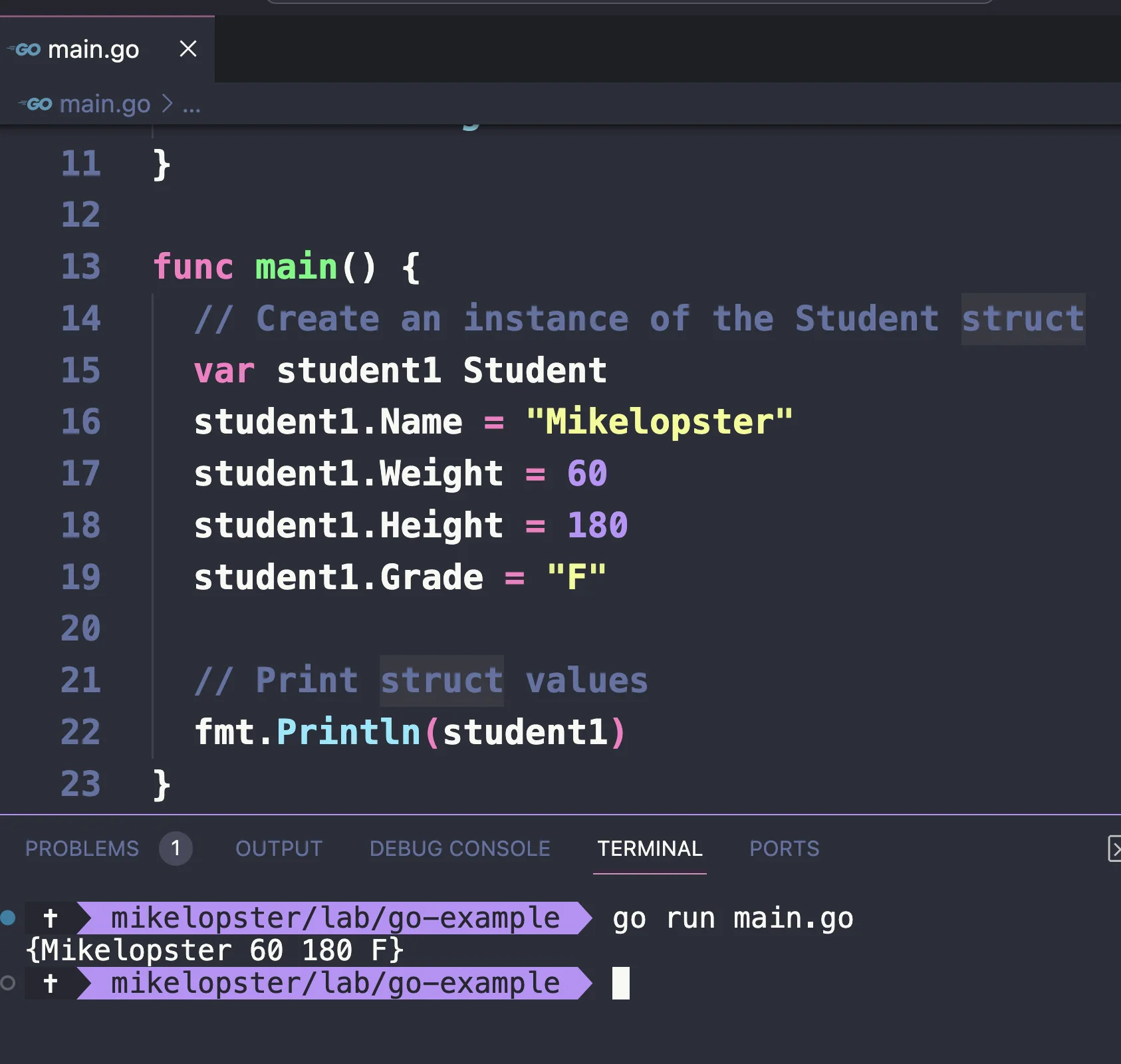
จาก code ด้านบน
- อย่างที่เห็นว่าเราสามารถ assign แต่ละ key ของ struct ออกมาได้
- จริงๆเราสามารถลดการเขียนลงเหลือเพียงเท่านี้ได้ (ไม่จำเป็นต้องมาระบุราย key เหมือนเดิม)
// Create an instance of the Student struct
var student1 Student = Student{
  Name:   "Mikelopster",
  Weight: 60,
  Height: 180,
  Grade:  "F",
}

// Print struct values
fmt.Println(student1)
รวมถึงสามารถใช้งานร่วมกับ data type ประเภทอื่นๆได้ เช่น
- ใช้งานร่วมกับ array
package main

import "fmt"

// Define a struct type
type Student struct {
	Name   string
	Weight int
	Height int
	Grade  string
}

func main() {
	// Create an array of Student structs
	var students [3]Student

	// Initialize the first student
	students[0] = Student{
		Name:   "Mikelopster",
		Weight: 60,
		Height: 180,
		Grade:  "F",
	}

	// Initialize the second student
	students[1] = Student{
		Name:   "Alice",
		Weight: 55,
		Height: 165,
		Grade:  "A",
	}

	// Initialize the third student
	students[2] = Student{
		Name:   "Bob",
		Weight: 68,
		Height: 175,
		Grade:  "B",
	}

	// Print array of structs
	fmt.Println(students)
}- ใช้งานร่วมกับ map
package main

import "fmt"

// Define the Student struct
type Student struct {
	Name   string
	Weight int
	Height int
	Grade  string
}

func main() {
	// Create a map with string keys and Student struct values
	students := make(map[string]Student)

	// Add Student structs to the map
	students["st01"] = Student{Name: "Mikelopster", Weight: 60, Height: 180, Grade: "F"}
	students["st02"] = Student{Name: "Alice", Weight: 55, Height: 165, Grade: "A"}
	students["st03"] = Student{Name: "Bob", Weight: 68, Height: 175, Grade: "B"}

	// Print the map
	fmt.Println("Students Map:", students)

	// Access and print a specific student by key
	fmt.Println("Student st01:", students["st01"])
}- รวมถึงใช้งานร่วมกับ struct กันเองก็ได้
package main

import "fmt"

// Define a struct type
type Person struct {
	Name    string
	Age     int
	Address Address
}

// Another struct type used in Person
type Address struct {
	Street  string
	City    string
	ZipCode int
}

func main() {
	// Create an instance of the Person struct
	var person Person
	person.Name = "Alice"
	person.Age = 30
	person.Address = Address{
		Street:  "123 Main St",
		City:    "Gotham",
		ZipCode: 12345,
	}

	// Alternative way to initialize a struct
	bob := Person{
		Name: "Bob",
		Age:  25,
		Address: Address{
			Street:  "456 Elm St",
			City:    "Metropolis",
			ZipCode: 67890,
		},
	}

	// Print struct values
	fmt.Println(person)
	fmt.Println(bob)
}
และนี่ก็คือ data type 3 ประเภทแรกที่เน้นเก็บข้อมูลเป็นหลัก
ตัวต่อไปเราจะพูดถึง function ที่เป็น data type ที่เน้นความเป็น functional มากขึ้น